Our Approach
Catholic. Classical. Comparative.
Named for the two books of God — nature and Scripture — read together.
The two books of God
The Fathers spoke of two books written by the same hand. One is Scripture. The other is creation itself, and everything that human beings have seen in it. Saint Paul told the Romans that the invisible things of God are clearly seen, being understood by the things that are made. The pagans read that second book, and some of them read it well.
That is the conviction under all of our work. Virgil's Sibyl sang of a child who would bring back the golden age. The Magi read a star. Egypt told of a mother hiding her son from a tyrant. These are not rivals to the Gospel to be dismissed, nor equals to be set on the same shelf. They are partial sights of a truth the Gospel shows whole. A student who learns to read both books, and to see where they meet, understands each one better.
Catholic, argued rather than assumed
Our curricula are Roman Catholic, in the traditional sense. Scripture is the Douay-Rheims. The commentary is Cornelius a Lapide, who gathered the Fathers into one reading of the whole Bible. Where Christians differ, on Mary or the Eucharist, the materials say so plainly and make the Catholic case on its merits.
But nothing is asked to be taken on authority alone. Students meet the best of what the nations believed, presented honestly and at full strength, and they weigh it against the Gospel with the evidence in front of them. The capstone of every unit is a thesis the student writes and defends aloud. Non-Catholic students are welcome, and they are asked to do the same thing: make their case, in writing, and make it well.
Primary sources, read whole
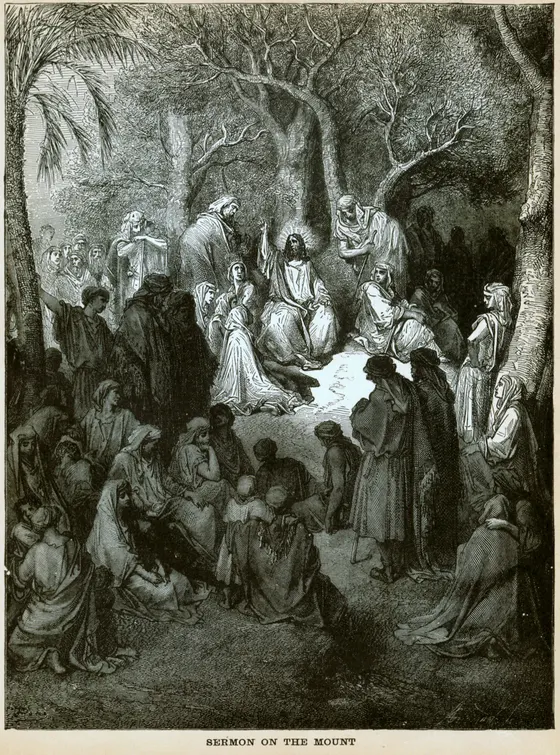
A summary tells a student what to think about a book. The book itself teaches him to think. So wherever we can, we put the sources in the student's hands: Virgil, not a paragraph about Virgil; the Gospel with its great commentator; the historians in their own words. Unit 1 of Scala Gentium reads Book VI of the Aeneid entire.
We choose public-domain texts and translations on purpose. They are free, they are good, and a family can keep reading them long after the course is over.
Why the progymnasmata
For nearly two thousand years, Western schools taught writing the same way: a fixed series of exercises, each a little harder than the last, each built on the one before. Fable, narrative, chreia, maxim, and on up to the thesis. Students who learned this way included Augustine, Erasmus, and Shakespeare.
The method works because it is concrete. The student always has a model, always knows what the finished piece should look like, and always writes about something real. Gradus ad Montem restores the sequence whole, with the ancient handbooks as its authority.
Why a trained memory
What a student cannot remember, he cannot think with. Memorized poems, psalms, and passages are the furniture of a mind. They come back unbidden, in good moments and hard ones, for the rest of a life.
The medieval schools knew how to build that furniture deliberately, and they wrote their methods down. The Craft of Memory recovers those methods and puts them to use: what the student stores is what he later writes with.
Contested history, told honestly
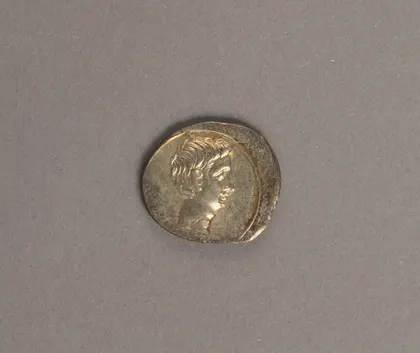
Some chapters of history are hard for Catholics, and some are hard for the Church's critics. We do not skip either kind. The Crusades, the Inquisition, Galileo, and the conquest of the Americas are taught with the evidence on the table: what happened, what the sources say, and where the honest arguments still lie.
We think young people can bear the truth, and that the Faith has nothing to fear from it.
Built for the parent at the table
Every teacher's book we write assumes that the parent has never studied the subject. It gives the questions to ask, the answers to listen for, a key for everything graded, and what to say when the conversation stalls. You will learn alongside your student, and the books are written so that this is a strength.